
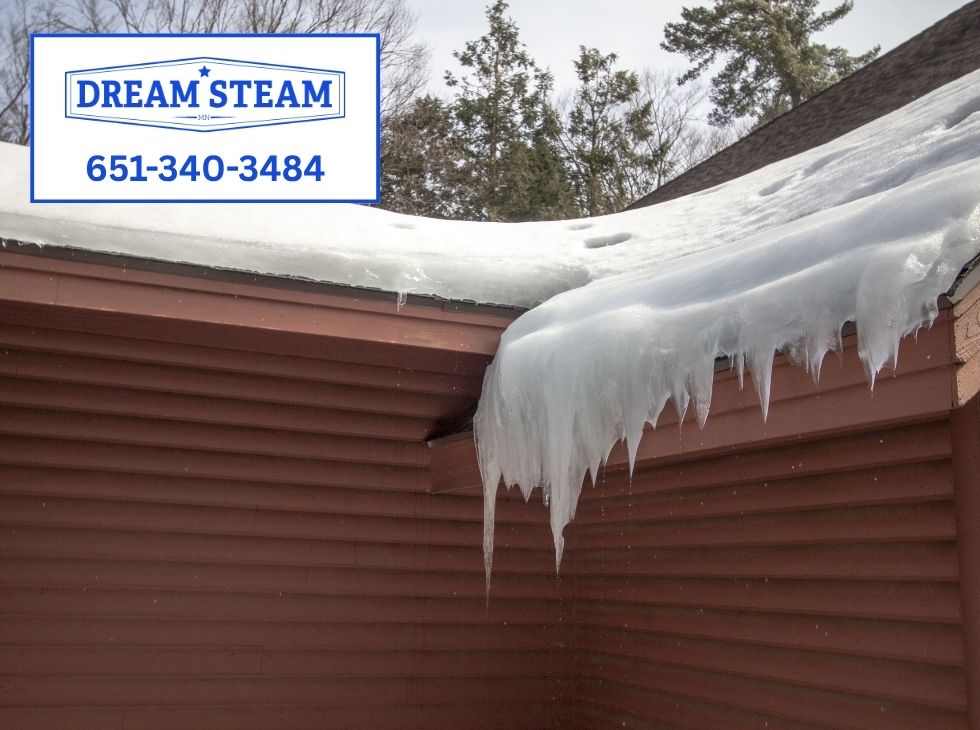
Icicles can be beautiful on a Minnesota winter morning, but sometimes they are telling you something important about what is happening on your roof. Ice dams form when snow melts on warmer portions of the roof and refreezes near colder roof edges. Over time, the frozen ridge can prevent additional meltwater from draining normally.
The challenge for homeowners is knowing when ordinary winter ice has become a problem that deserves professional attention. Here are eight warning signs that it may be time to contact a professional ice dam remover in Minnesota.
1. A Thick Ridge of Ice Is Forming Along the Roof Edge
A few small icicles do not automatically mean you have a serious ice dam. A thick, continuous ridge of ice along the eaves is more concerning. As the ridge grows, additional meltwater may become trapped behind it. If you can clearly see substantial ice buildup from the ground, begin monitoring it closely and consider contacting an ice-dam professional.
2. Ice Continues Growing Between Storms
If your roofline seems to gain more ice every time temperatures rise and fall, the dam may be actively developing. The repeated cycle works like this:
- Heat escaping into the attic warms part of the roof
- Roof snow melts
- Meltwater travels toward the cold eaves
- The water refreezes
- The frozen ridge becomes larger
The longer this cycle continues, the more substantial the dam can become.
3. Water or Ice Is Visible Behind the Dam
A ridge of ice becomes particularly problematic when meltwater collects behind it. From a safe location, you may sometimes notice wet areas, slush, or ice buildup farther up the roof behind the main frozen ridge. This indicates that water may not be draining normally.
4. You See Water Stains on Ceilings or Walls
This is one of the clearest warning signs. If brown or yellow stains begin appearing on ceilings or near the tops of exterior walls during snowy winter weather, water may be entering the building. Do not assume the problem will disappear when temperatures drop again. Freezing may temporarily stop visible dripping, but trapped moisture may remain inside insulation, drywall, or building materials. Contact an appropriate roofing or ice-dam professional to determine where the water is coming from.
5. Paint Begins Bubbling or Peeling
Water entering walls or ceilings may cause paint to bubble, blister, or peel. This may occur around exterior walls, ceiling edges, windows, or other areas beneath the roofline. Because moisture problems are not always immediately visible, a change in paint or drywall appearance during winter deserves attention.
6. The Attic Insulation Is Wet
If you can safely access the attic from inside the home, look for moisture around the roof deck, insulation, or areas near exterior walls. Wet insulation is a concern because moisture can reduce insulating performance and contribute to additional building problems. Do not climb into difficult attic areas or disturb electrical components simply to investigate. If moisture is extensive, bring in a qualified professional.
7. The Same Part of the Roof Develops Ice Every Winter
Recurring ice dams are a major clue. If the same roof edge develops a thick ice ridge year after year, the issue probably involves conditions inside the home rather than bad luck. Heat may be escaping through attic penetrations, recessed lighting, plumbing openings, attic hatches, or insufficiently sealed areas. Professional ice-dam removal can address the immediate winter problem, but the recurring pattern should also prompt an energy or insulation evaluation.
8. The Ice Is Too High or Dangerous to Reach Safely
Sometimes the biggest warning sign is simply that you cannot safely address the situation yourself. Roof snow, ice, frozen gutters, and ladders are a dangerous combination. If removing ice requires climbing onto the roof or working from an unstable ladder, hiring a professional is usually the better option.
Large Icicles Can Be a Clue—but They Are Not the Whole Story
Homeowners often equate icicles with ice dams. Large icicles may indicate melting and refreezing around the roof edge, so they are worth paying attention to. However, the more important issue is whether a ridge of ice is blocking meltwater from leaving the roof. Do not judge the severity of an ice dam only by the length of the icicles hanging from the gutter.
What Should You Do When You Spot an Ice Dam?
First, resist the urge to climb onto the roof with a hammer or shovel. Instead:
- Inspect the roof safely from the ground.
- Check ceilings and exterior walls for water stains.
- Look inside the attic if it can be accessed safely.
- Photograph visible ice buildup and interior damage.
- Contact a professional ice-dam removal company.
- Ask whether steam equipment will be used.
If water is actively entering the home, move belongings away from the affected area and take reasonable steps to limit interior damage while professional help is arranged.
Why Early Removal May Save You Trouble
An ice dam does not need to reach enormous proportions before you respond. Calling earlier may allow a professional to address the buildup before multiple additional freeze-and-thaw cycles make the dam larger. It also gives you more scheduling flexibility. During widespread ice-dam events across Minnesota, contractors may receive a surge of emergency calls.
Removing the visible ice solves the immediate problem, but homeowners should also ask why the snow was melting unevenly in the first place. Warm air leaking into the attic is a major cause of Minnesota ice dams.
Pay Attention to What Your Roof Is Telling You
Minnesota roofs endure heavy snow, extreme cold, sunshine, wind, and dramatic temperature swings throughout the winter. Some ice is inevitable. But a growing ridge of ice, trapped water, wet insulation, or interior stains should not be ignored. Recognizing the warning signs early gives you time to find a qualified Minnesota ice dam removal professional before damage becomes more extensive. When winter starts leaving clues around your home, pay attention. Your roof may be telling you that it is time to call for help.