
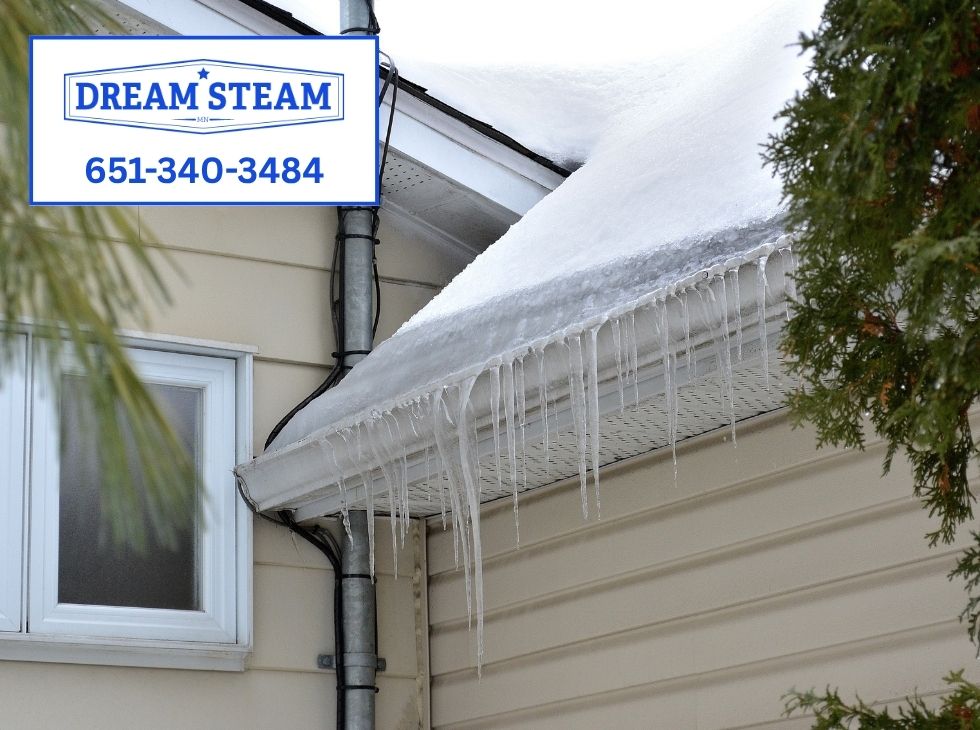
By the time a massive ice dam is hanging from your Minneapolis/St. Paul roof, winter preparation season is officially over. At that point, you are dealing with the problem rather than preventing it. The better strategy is to begin thinking about ice dams before the first major snowfall. Twin Cities’ homeowners who understand why ice dams form can take steps in fall and early winter to reduce the risk—and know exactly what to do if ice still develops.
At Dream Steam MN, we understand that preparing a home for winter is about more than turning on the furnace. Snow, ice, moisture, road salt, freezing temperatures, and long periods indoors all place extra demands on Twin Cities’ homes. Here is a practical ice-dam preparation plan to use before winter gets serious.
Step 1: Understand What Actually Causes an Ice Dam
Many homeowners assume gutters cause ice dams. While ice can certainly fill gutters, the core problem usually begins with heat escaping from the house. Warm indoor air leaks into the attic and warms sections of the roof deck. Snow touching those warmer areas begins melting. The water travels downward until it reaches a colder roof edge or eave. There, it freezes.
As the cycle repeats, a ridge of ice forms. Additional meltwater may then collect behind it. That is why simply removing visible ice without addressing heat loss may result in the same problem returning during the next snowy winter.
Step 2: Inspect the Attic Before Snow Arrives
Fall is a great time to look inside your attic. Pay attention to obvious gaps and penetrations where warm air may escape upward, including areas around:
- Plumbing vents
- Electrical wiring
- Attic access doors
- Light fixtures
- Ductwork
- Chimney penetrations
- Bathroom exhaust systems
Air sealing these areas correctly can reduce the amount of warm indoor air entering the attic. If you are unsure what you are looking at, consider scheduling a professional home-energy assessment.
Step 3: Review Your Attic Insulation
Insulation helps slow heat transfer between your living space and attic. However, insulation alone cannot compensate for major air leaks. Think of air sealing and insulation as a team. Air sealing helps prevent warm air from escaping into the attic. Insulation helps reduce heat movement through building surfaces. When both are addressed properly, the roof is more likely to remain evenly cold instead of developing warm areas that melt snow.
Step 4: Make Sure Exhaust Fans Are Properly Directed
Bathroom, kitchen, or laundry exhaust should not simply dump warm moist air into the attic. Warm humid air contributes to attic moisture problems and can add heat to the roof structure. If you are unsure where a fan vents, fall is a good time to investigate before snow covers the roof.
Step 5: Know What Your Roof Normally Looks Like
Once winter arrives, occasionally look at your roof from the ground. You may begin noticing patterns. Does one section lose snow much faster than another? Is there a bare patch while the rest of the roof remains snow-covered? Does ice consistently form near one room, dormer, valley, or exterior wall? Uneven snow melting can provide useful clues about heat distribution beneath the roof.
Step 6: Consider Roof Snow Removal After Heavy Storms
Roof snow is one of the ingredients necessary for an ice dam. Removing some snow from accessible roof edges with an appropriate roof rake may reduce the amount available to melt and refreeze. However, safety comes first. A roof rake should be used from the ground according to its instructions. Homeowners should not climb onto a snowy or icy roof simply to shovel it. If roof access is required, consider hiring a professional.
Step 7: Find an Ice Dam Removal Company Before You Need One
This is one of the easiest preparation steps—and one homeowners often forget. Before a major Twin Cities’ winter weather event, search for reputable local ice dam removal companies. Ask whether they use professional steam equipment. Verify insurance. Read recent customer reviews. Learn how pricing works. Then save the phone number. If a thick ice dam develops in January, you will not have to begin researching contractors while worrying about a wet ceiling.
Step 8: Know Which Removal Methods to Avoid
Avoid the temptation to attack an ice dam with whatever happens to be in the garage. Sharp tools and aggressive chipping can damage roof materials. Chemicals may create problems for roofing, metal, plants, and runoff areas. Uncontrolled heating methods introduce additional risks. If an established ice dam needs removal, look for a professional who uses equipment designed for the task.
Step 9: Act When the Ice Begins Growing
Do not assume you need to wait until water enters your home before contacting an ice-dam remover. Watch for:
- Thickening ice along the eaves
- Ice repeatedly returning after temperature changes
- Large areas of frozen gutter
- Visible water or slush behind a frozen ridge
- Ceiling stains
- Wet attic insulation
- Peeling paint or drywall changes
Earlier intervention may prevent additional buildup.
Step 10: After Removal, Investigate Why It Happened
This step separates temporary ice removal from long-term home improvement. Once winter ends, do not forget what happened.
If your home developed a significant ice dam, investigate attic air leakage and insulation before the following winter. A professional home-energy assessment can use diagnostic equipment to locate air leaks and identify areas where improvements may reduce heat loss.
Does Attic Ventilation Solve Ice Dams?
Homeowners often hear that adding more roof vents will automatically solve ice dams. Ventilation has an important role in building performance, but simply adding powered attic ventilation is not considered a cure for ice dams. The priority is reducing unwanted heat and moist air movement from the living space into the attic through proper air sealing and insulation.
The Best Ice Dam Removal Strategy Begins Before the Ice Forms
No Minneapolis/St. Paul homeowner can guarantee that an ice dam will never appear. Our winters are simply too unpredictable.
What you can do is reduce the conditions that encourage ice dams, monitor your home during winter, and know who to call if professional removal becomes necessary. The best time to think about ice dams is not after water appears on your ceiling. It is during fall, while you still have time to inspect the attic, improve air sealing, evaluate insulation, and research a reputable Twin Cities’ ice dam removal company.
A little planning before the snow falls can make a big difference when Twin Cities’ winter finally arrives. Dream Steam MN is proud to serve homeowners and businesses throughout St. Paul, Minneapolis, and surrounding Twin Cities communities. When winter weather affects your home, preparation is always easier than panic.