
What is filtration soiling?
A dark brown, gray, or black line along the edge of your carpet, next to a baseboard or under a door, may be filtration soiling. As air moves through a narrow gap, carpet fibers can catch some of the particles it carries. Over time, that small strip of carpet can look darker than the rest of the room, even if you vacuum regularly.
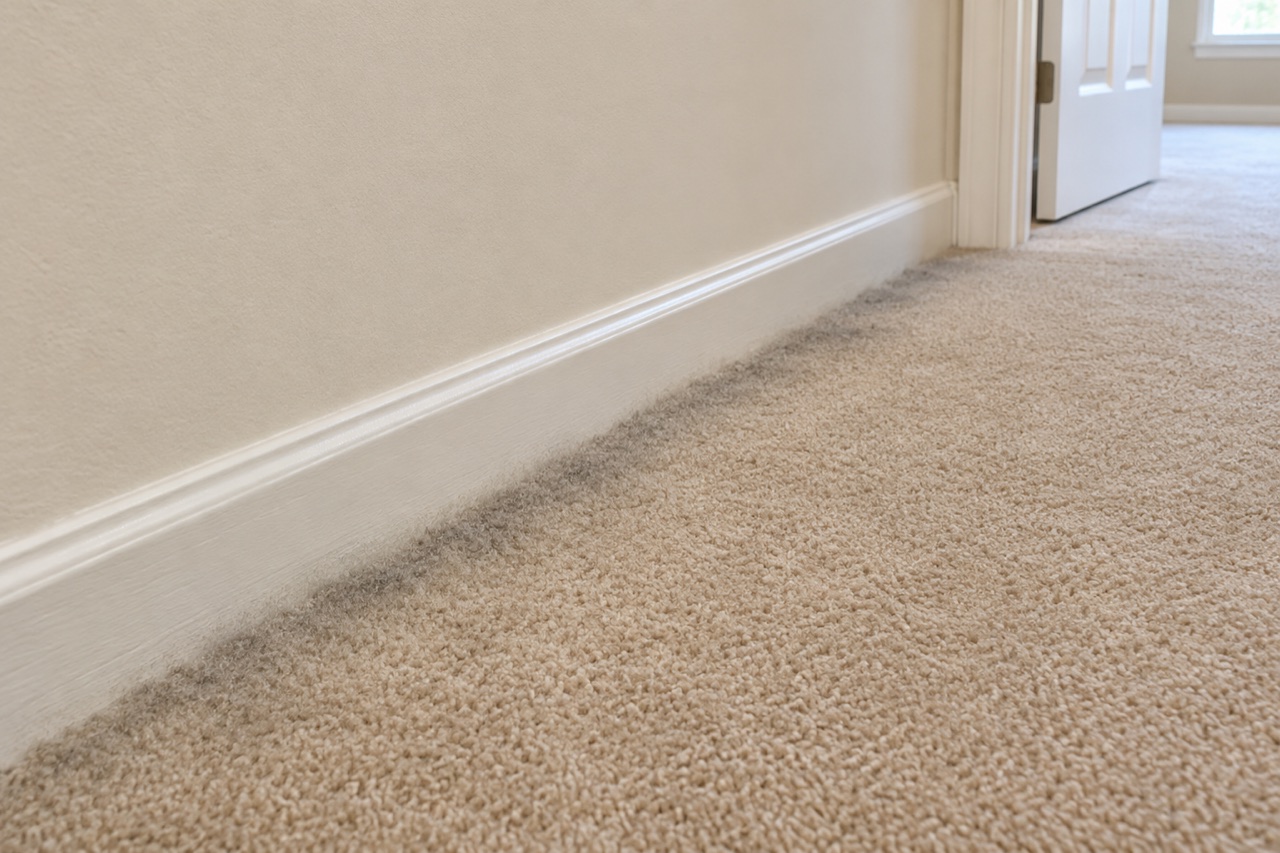
Is it filtration soiling, or did a spot come back?
Start with two clues: where the mark is and when it appeared.
- A narrow line that follows a wall, doorway, or stair edge and developed gradually: Look at where air might pass over or through the carpet. This pattern fits filtration soiling.
- One spot that came back as the carpet dried: That may be wicking. Moisture can carry material from an old spill or soil below the surface back up the fibers. Our guide to why brown spots return after carpet cleaning explains what to check.
- A broad, dull path where people walk: Foot traffic may explain more of what you’re seeing. If the carpet is persistently damp or there’s a musty smell or recent leak, check for a moisture problem before treating the mark as ordinary soil. Color alone can’t tell you what caused it.
Take one close photo of the line and one from farther back. The wider photo shows whether it follows a doorway or continues around the room. That’s useful information if you later ask someone to look at it.
Why is my carpet brown along the baseboards or under a door?
Think of the carpet edge as a small filter nobody intended to install. When air takes the same route repeatedly, the fibers can collect fine dust, soot, or oily cooking particles. You may notice the line where carpet meets a baseboard or hard flooring, especially if there’s a gap there. The Carpet and Rug Institute explains how concentrated airflow leaves these deposits.
A closed door can change where the air moves. In some homes with forced air heating or cooling, air passes through the gap beneath a closed interior door. That can leave a line right across the threshold. If you notice that pattern, see whether the room feels drafty or stuffy when the system runs and the door is closed. If it’s a recurring problem, ask an HVAC professional how air returns from that room. Keep vents clear and leave door gaps and safety features alone. Keep bedroom doors closed while sleeping, as the Fire Safety Research Institute recommends.
How do you clean carpet edges along baseboards?
- Start dry. If the carpet maker allows it, try a few gentle passes along a dry edge with a crevice attachment. This can pick up loose dust. A line that remains may have finer soil embedded in the fibers.
- Look for ways to reduce the particles. If you burn candles often near the affected room, try burning them less. Use an existing range hood that vents outdoors when cooking, and follow your HVAC system’s guidance for filter selection and replacement. The EPA’s guide to indoor particles explains why these steps can help reduce particles at the source or in the air. They won’t erase a line that’s already there.
- Stop before you soak or scrub. If vacuuming makes little difference, avoid flooding the seam or reaching for a kitchen degreaser. Check your carpet care instructions. If you don’t know the fiber or the line keeps returning, ask for an assessment before using another product.
Can cleaning remove black lines from carpet edges?
Cleaning may lighten the line. How much it improves depends on the carpet, what’s in the fibers, and how long it has built up. Even if it looks better, the line may return if air keeps moving through the same gap. If you’re considering residential carpet cleaning, point out the edge or doorway in advance and ask what improvement is realistic before deciding what to clean.